April 1, 2026 — Washington, D.C. — A new wave of funding is transforming access to computer science training across the United States, as coding education youth grant programs expand rapidly in response to a growing digital skills gap.
Education leaders, nonprofits, and school districts are increasingly tapping into a mix of federal, state, and private funding streams designed to prepare young Americans for high-demand careers in technology. Analysts say the rise in coding education youth grant or youth coding grants reflects urgent workforce needs—and a broader push to make STEM education more inclusive.
Similar to coding education youth grant, these ongoing grants for reentry programs 2026 are gaining traction, highlighting a parallel push to equip formerly incarcerated individuals with skills for reintegration into today’s technology-driven workforce
What is a Coding Education Youth Grant?
A coding education youth grant is funding provided by government agencies, nonprofits, or private organizations to support computer science and STEM learning programs for young people. These grants help schools, nonprofits, and community groups deliver coding classes, digital skills training, and technology access to students—especially in underserved communities.
Why Coding Education Youth Grant Are Surging
Demand for computing and digital skills continues to outpace the supply of trained workers nationwide. According to industry projections, tech-related roles remain among the fastest-growing occupations in the U.S., pushing policymakers and foundations to invest in early talent pipelines.
As a result, funding for coding education youth grant has expanded significantly in 2026, supporting:
- In-school computer science education
- Afterschool coding clubs
- Community-based STEM initiatives
- Workforce readiness programs
Many initiatives now focus on underrepresented groups, helping close equity gaps in the tech sector.
Federal Funding Driving Nationwide Access
Federal agencies remain central to expanding computer science education through structured grant programs.
National Science Foundation (NSF)
The National Science Foundation leads several key initiatives:
- ITEST (Innovative Technology Experiences for Students and Teachers): Supports hands-on STEM learning, including coding and robotics
- CS for All: Expands equitable computer science education in schools
- AISL (Advancing Informal STEM Learning): Funds programs in museums, libraries, and community spaces
Learn more on the official NSF site: https://www.nsf.gov
These initiatives form a major part of the national strategy to expand access to coding education youth grant.
U.S. Department of Education
The U.S. Department of Education supports digital learning through:
- Title IV-A Grants: Funding for coding curriculum and teacher training
- 21st Century Community Learning Centers (21st CCLC): Afterschool STEM programs
- Education Innovation and Research (EIR): Scaling effective education models
Explore programs: https://www.ed.gov
Private Sector and Foundations Expand Opportunities
Private organizations are accelerating access to STEM education through competitive funding and partnerships.
Major Initiatives
- Google.org Impact Challenge — funds digital skills and economic opportunity programs
- Code.org — provides curriculum, grants, and teacher training
- Verizon Innovative Learning — delivers devices and STEM education to underserved schools
Additional Support
- Kapor Center
- Robin Hood Foundation
- Simons Foundation
Local foundations are also increasing support for grassroots programs, making funding more accessible at the community level.
Related: See our guide on Top STEM Grants for Students in 2026
Also read: How to Apply for Federal Education Grants Successfully
State-Level Programs Strengthen Local Impact
States are also launching initiatives to expand access to computer science education.
Common programs include:
- Governor-backed STEM grant initiatives
- State-funded teacher training in coding
- Workforce development programs for youth tech skills
- Creative tech funding (e.g., game design, digital arts)
Organizations are encouraged to monitor state education websites for localized funding opportunities.
How to Win Youth Coding Grants
With competition rising, successful applicants are becoming more strategic. Experts recommend:
- Align with workforce demand: Target real tech skill gaps
- Define your audience: Be specific about age and demographics
- Show proven impact: Include pilot results or past success
- Detail your curriculum: Mention tools like Python or Scratch
- Plan sustainability: Show long-term viability
- Track outcomes: Measure participation and skill development
Programs that connect education with career pathways are more likely to secure funding.
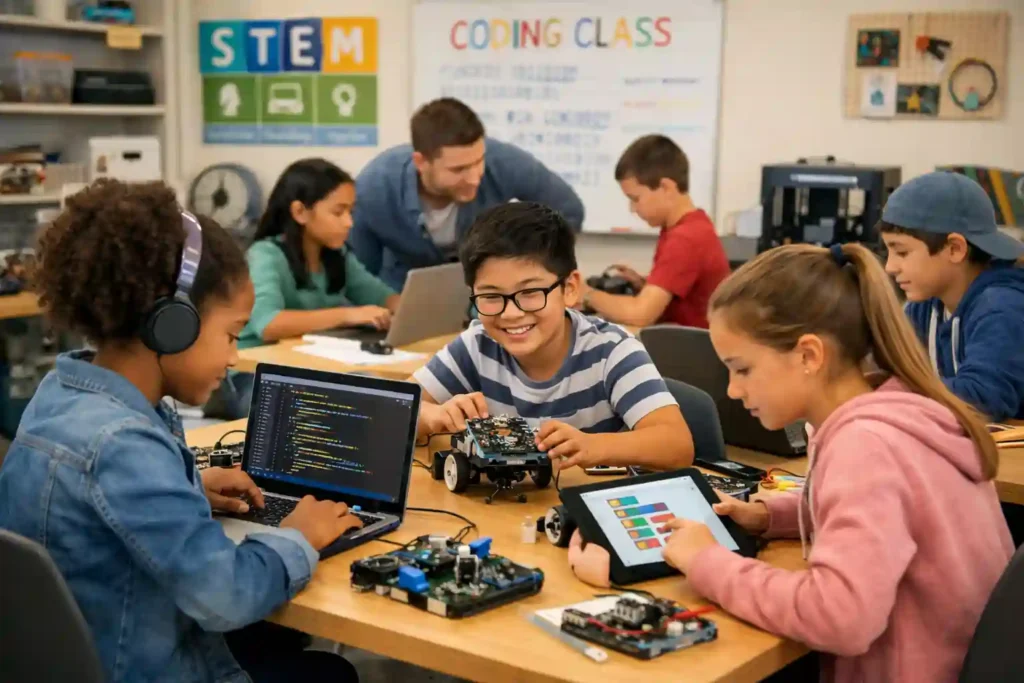
Visual Insight: Coding Education in Action 2026
Outlook: A Turning Point for STEM Education
As the U.S. economy becomes increasingly digital, 2026 could mark a defining moment for early technology education. The expansion of coding education funding is not just about grants—it reflects a long-term investment in the future workforce.
For schools, nonprofits, and community leaders, the opportunity is clear: funding is growing, but success depends on preparation, strategy, and alignment with workforce needs.
Bottom Line
The rise of coding education youth grant programs is opening doors for millions of young Americans. Organizations that act early, build strong proposals, and align with industry demand stand to benefit from one of the fastest-growing education funding trends in the country.
As the rise of coding education youth grant programs continues to open doors for millions of young Americans, staying informed is key to taking advantage of these opportunities. On GrantsReentryPrograms.us, we provide up-to-date guides, funding alerts, and step-by-step resources to help organizations and individuals successfully find and apply for grants. If you’re serious about securing funding and building impactful programs, explore our latest insights and start positioning yourself for success today.